
Best Cities to Launch Your NGO Career in Nigeria (2026 Guide)
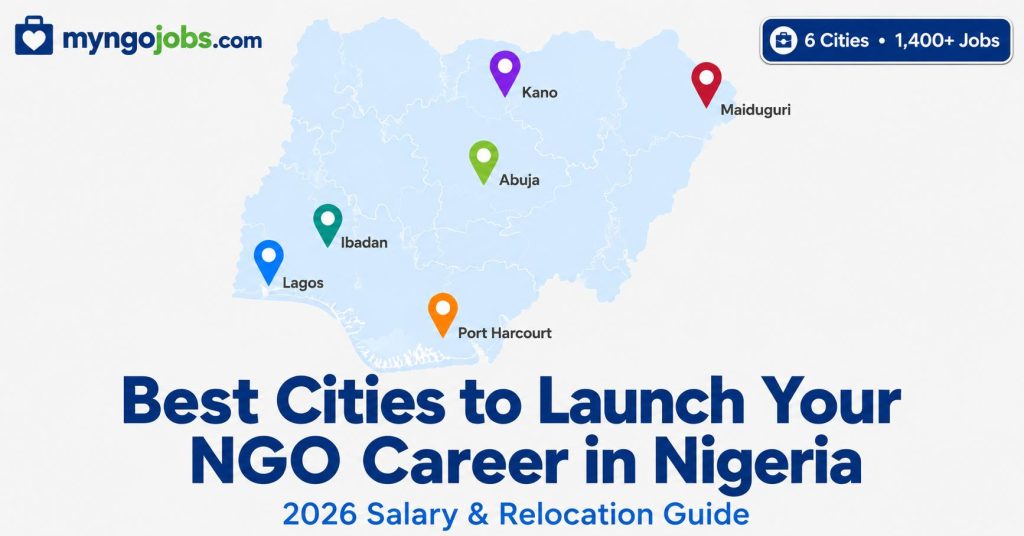
Nigeria’s non-governmental organization (NGO) sector has grown into one of the largest and most dynamic in Africa, with over 190,000 registered NGOs working across critical areas such as health, education, humanitarian response, governance, and economic development. From grassroots community-based organizations to global agencies, the sector continues to expand in response to Nigeria’s complex development needs and large population.
This growth has also made Nigeria one of the top NGO job markets on the continent. International organizations, donor agencies, and local NGOs are constantly recruiting talent for roles ranging from field assistants and community mobilizers to program managers and technical specialists. However, one factor that many job seekers underestimate is location.
Where you choose to start your NGO career in Nigeria can significantly shape your journey. Location affects:
- Job access — some cities have far more opportunities than others
- Career growth speed — field-heavy locations often accelerate experience
- Exposure to international NGOs — certain cities host headquarters and donor networks
Understanding these differences is key to making smart career decisions.
To simplify this, this guide breaks Nigeria into three strategic NGO career categories:
- Tier 1: Major NGO hubs — cities with the highest concentration of organizations and structured roles
- Tier 2: Regional growth hubs — emerging locations with growing opportunities
- Tier 3: Underrated opportunity states — less competitive areas offering strong entry points and field experience
By the end of this guide, you’ll gain a clear, practical strategy for launching your NGO career in Nigeria. You’ll understand which cities align with your goals, how to position yourself effectively, and how to move from entry-level roles to more advanced opportunities with confidence.
2. How Nigeria’s NGO Ecosystem Works
Nigeria’s NGO ecosystem is broad, layered, and highly interconnected, combining international actors with strong local implementation networks. Understanding how it is structured will help you target the right opportunities and locations.
At the top level are International NGOs (INGOs)—organizations funded by global donors and operating across multiple countries. These NGOs typically bring large-scale funding, technical expertise, and standardized systems. Alongside them are United Nations agencies, which play a major role in coordination, policy influence, and large humanitarian or development programs. Completing the structure are local NGOs, which are often deeply rooted in communities and responsible for on-the-ground implementation, outreach, and sustainability.
Operationally, the system is partly centralized but largely decentralized in practice. Many organizations maintain their national headquarters in Abuja due to its proximity to government institutions, embassies, and donor agencies. This is where you’ll find strategic roles such as program design, partnerships, finance, and policy engagement.
However, actual project delivery happens across different regions depending on need:
- Northeast Nigeria (e.g. Maiduguri, ): Primarily humanitarian work—emergency response, nutrition, protection, and WASH programs
- Northwest Nigeria (e.g. Katsina, Zamfara , ): A mix of humanitarian and development interventions, increasingly attracting NGO attention
- Southern Nigeria (e.g. Lagos, Port Harcourt): More focused on long-term development, governance, education, and economic empowerment
For example, organizations like Centre for Democracy and Development operate from Abuja with a strong focus on governance and policy, while Devatop Centre for Africa Development combines advocacy with grassroots interventions across multiple states.
Criteria: What Makes a City Ideal for NGO Careers
Not all cities offer the same pathway into the NGO sector. Some provide visibility and structured roles, while others offer faster entry through fieldwork. To choose wisely, you need to evaluate cities using a set of practical criteria that directly affect your chances of getting hired and growing in the sector.
Core Evaluation Factors
1. NGO Density
Cities with a high concentration of NGOs naturally offer more job openings, partnerships, and career mobility. For example, Abuja has one of the highest NGO densities in the country, increasing your chances of finding roles across multiple organizations. In contrast, lower-density locations may have fewer openings but less competition.
2. Presence of INGOs & Donors
The presence of international NGOs and donor agencies often signals better funding, structured career paths, and exposure to global standards. These organizations are typically headquartered in major cities but operate projects elsewhere. Being close to them can open doors to long-term career growth.
3. Entry-Level Job Availability
Some cities are better suited for beginners than others. Locations with active field projects—such as Maiduguri —often have more openings for roles like field assistants, enumerators, and community mobilizers. Meanwhile, cities dominated by headquarters may require prior experience.
4. Field Exposure Opportunities
Hands-on experience is one of the fastest ways to grow in the NGO sector. Cities or states with ongoing humanitarian or development projects provide opportunities to gain real-world skills in program implementation, data collection, and community engagement—skills that are highly valued across the industry.
5. Security & Accessibility
Security conditions can influence both job availability and your working environment. Some high-opportunity areas come with operational risks, restricted movement, or limited infrastructure. Accessibility—such as transport links and communication networks—also affects how efficiently NGOs operate and hire.
6. Cost of Living vs Salary
A city may offer many opportunities but still be difficult to sustain financially. For instance, while Lagos and Abuja provide higher-paying roles, they also come with higher living costs. On the other hand, cities like Kano or Katsina may offer lower salaries but more affordable living, making them practical starting points.
Important Insight
A key principle to understand is that:
- High opportunity does not always mean easy entry.
Cities with many NGOs are often highly competitive and may require prior experience or strong networks. - Low competition does not guarantee long-term stability.
Less crowded locations may help you get your first role faster, but opportunities may depend on short-term projects and fluctuating funding.
The smartest approach is to balance these factors based on your current level and goals—choosing a city not just for immediate access, but for how it fits into your long-term NGO career strategy.
The most important takeaway is this:
“Where NGOs are headquartered ≠ where most jobs are.”
Many job seekers focus only on Abuja, but a significant number of entry-level and field roles are actually located in project states. Understanding this structure allows you to approach your NGO career strategically—starting where opportunities are most accessible, then advancing toward more centralized roles over time.
Tier 1: Major NGO Career Hubs (High Opportunity + High Competition)
These cities represent the core engines of Nigeria’s NGO ecosystem. They offer the highest concentration of organizations, funding access, and structured career paths—but they also come with intense competition and higher expectations. If you’re aiming for long-term growth, international exposure, or leadership roles, these are the cities that shape careers.
4.1 Abuja– Nigeria’s NGO Headquarters
Abuja is widely regarded as the center of NGO operations in Nigeria, hosting over 200+ NGOs, including major international organizations, donor agencies, and diplomatic missions. It is the strategic hub where decisions are made, partnerships are formed, and national programs are designed.
The city houses:
- UN agencies and multilateral institutions
- Donor organizations and embassies
- Headquarters of both international and leading local NGOs
Because of this concentration, Abuja offers some of the most structured and professional roles in the sector. Common positions include:
- Program Officers responsible for project design and implementation
- Monitoring & Evaluation (M&E) Specialists tracking impact and performance
- HR/Admin professionals managing operations and compliance
Why Abuja stands out:
The biggest advantage is job volume and diversity. You’re not limited to one organization or sector—you can move across health, governance, education, and humanitarian programming. It’s also the best place for networking, with frequent workshops, stakeholder meetings, and donor engagements.
Challenges to consider:
Abuja is highly competitive. Many candidates here already have certifications, prior experience, or strong networks. Additionally, the cost of living is high, which can be difficult for entry-level professionals without stable income.
Best for: Graduates and professionals seeking structured NGO careers, long-term growth, and exposure to international systems.
4.2 Maiduguri– Humanitarian Epicenter
Maiduguri is the heart of humanitarian operations in Nigeria, driven by ongoing emergency needs in the Northeast. Unlike Abuja, which focuses on strategy, Maiduguri is where real-time intervention happens.
Key focus areas include:
- Emergency response and crisis management
- Nutrition and health interventions
- Water, Sanitation, and Hygiene (WASH)
- Protection and support for displaced populations
This environment creates high demand for entry-level and technical roles, especially:
- Field Assistants and Enumerators
- Community Mobilizers
- Health and Nutrition Workers
Why Maiduguri is powerful for career growth:
Few places in Nigeria offer such rapid, hands-on experience. Within a short time, professionals can gain exposure to project implementation, donor reporting, and multi-sector coordination. This type of experience is highly valued when transitioning to roles in Abuja or international positions.
Challenges to consider:
The biggest concern is security risk and a demanding work environment. Living conditions can be tough, and operations may be restricted depending on the situation.
Best for: Individuals seeking fast-track experience, especially those willing to work in challenging environments.
4.3 Lagos– Development & Policy Hub
Lagos offers a different kind of NGO ecosystem—less humanitarian, more development-focused and policy-driven. As Nigeria’s commercial capital, it connects NGOs with the private sector, foundations, and innovation ecosystems.
Key focus areas:
- Education and youth development
- Policy research and governance
- Corporate Social Responsibility (CSR) programs
- Social enterprise and innovation
What makes Lagos unique:
The strong presence of corporate foundations and private sector partnerships creates opportunities that don’t exist in other cities. NGOs here often collaborate with companies on large-scale development initiatives, offering exposure to funding models and program sustainability.
Advantages:
- Diverse career paths (NGOs, foundations, consulting, social enterprises)
- Strong networking within both development and corporate sectors
Challenges:
- Fewer humanitarian roles compared to northern cities
- Competitive job market, especially for high-level roles
Best for: Professionals interested in policy, advocacy, research, and development programming, especially those looking to bridge NGO and private sector work.
4.4 Kano– Northern Coordination Hub
Kano serves as a strategic coordination hub for northern Nigeria, linking operations between Abuja headquarters and field locations across the Northwest and Northeast. It plays a critical role in regional implementation and program oversight.
Organizations such as Centre for Information Technology and Development operate from Kano while managing projects across multiple states, making the city an important base for multi-state interventions.
Opportunities in Kano include:
- Program and field coordination roles
- Monitoring and reporting positions
- Community-based project implementation
Why Kano is a smart choice:
Compared to Abuja, Kano offers a lower cost of living while still providing access to significant NGO activity. It also allows professionals to gain both field and coordination experience, which is valuable for career progression.
Limitations:
- Fewer high-level headquarters roles
- Slightly less exposure to donor-level engagement compared to Abuja
Best for: Professionals seeking a balance between field experience and career growth, especially at entry to mid-level stages.
Key Takeaway for Tier 1 Cities
- Abuja→ Best for structure, networking, long-term growth
- Maiduguri→ Best for rapid, hands-on humanitarian experience
- Lagos→ Best for policy, development, and private sector linkages
- Kano→ Best for regional coordination and balanced exposure
Choosing between them depends on your career stage, risk tolerance, and long-term goals.
Tier 2: Emerging NGO Growth Cities (Moderate Opportunity)
Not every strong NGO career starts in the biggest hubs. Tier 2 cities offer a valuable middle ground—they combine growing opportunities with lower competition and more accessible entry points. While they may not have the same volume of jobs as Abuja or Maiduguri, they provide practical experience, faster access, and strategic positioning for long-term growth.
These cities are especially useful if you want to:
- Enter the sector with less competition
- Gain hands-on experience quickly
- Build a strong profile before moving to Tier 1 hubs
5.1 Yola – Rising Humanitarian Base
Yola has steadily emerged as a key humanitarian base in Northeast Nigeria, complementing operations in Maiduguri. As humanitarian needs expanded across the region, many NGOs established offices or field sites in Yola to support program delivery in surrounding areas.
Unlike Maiduguri, which is heavily saturated with organizations and talent, Yola offers a less crowded and more accessible entry point into the NGO sector.
What drives NGO presence in Yola:
- Spillover of humanitarian operations from Borno State
- Strategic access to communities in Adamawa and neighboring regions
- Expansion of programs in health, protection, and livelihoods
Types of opportunities available:
- Field Assistants and Enumerators
- Community Mobilizers
- Program Support Staff
- Logistics and Admin support roles
These roles are often entry-level friendly, making Yola an excellent starting point for individuals with limited NGO experience.
Advantages of starting in Yola:
- Lower competition compared to Maiduguri and Abuja
- Increased chances of getting hired quickly
- Exposure to real fieldwork and community engagement
- Opportunity to build practical skills that are highly valued in the sector
Challenges to consider:
- Limited number of senior or specialized roles
- Fewer networking events compared to Abuja
- Infrastructure and amenities may be less developed
Best for: Individuals looking for entry-level NGO roles, especially those willing to gain hands-on experience in humanitarian settings.
5.2 PortHarcourt– Environmental & CSR Hub
Port Harcourt offers a distinct NGO landscape shaped by the realities of the Niger Delta region. Unlike northern cities where humanitarian response dominates, Port Harcourt is driven by environmental sustainability, community development, and corporate social responsibility (CSR) initiatives.
The presence of oil and gas companies has led to significant investment in:
- Environmental protection and remediation
- Community development projects
- Youth empowerment and livelihood programs
As a result, NGOs in Port Harcourt often work closely with corporate foundations and private sector partners, creating a unique blend of development and business-oriented programming.
Key focus areas:
- Environmental conservation and climate-related interventions
- Community engagement in oil-producing regions
- Livelihood and economic empowerment programs
- Advocacy and policy around environmental justice
Types of roles available:
- Project Officers and Coordinators
- Community Engagement Officers
- Environmental Program Assistants
- Monitoring and Evaluation roles
Advantages of Port Harcourt:
- Strong link between NGOs and the private sector
- Opportunities in specialized fields like environmental management
- Exposure to CSR-funded projects and sustainable development models
Challenges to consider:
- Fewer NGOs compared to Abuja
- Opportunities can be sector-specific (environment, CSR, development)
- Entry-level roles may require some prior experience or relevant background
Best for: Professionals interested in environmental work, community development, and CSR-driven NGO careers, particularly those looking to work at the intersection of NGOs and the private sector.
Key Takeaway for Tier 2 Cities
- Yola→ Best for breaking into humanitarian work with less competition
- PortHarcourt→ Best for specialized development careers (environment, CSR, community development)
Tier 2 cities may not always be the most obvious choice, but they offer a strategic advantage: easier entry, faster experience, and a solid foundation for moving into larger NGO hubs later in your career.
Tier 3: Underrated NGO Career States (Hidden Opportunities)
These states are often overlooked in mainstream career advice—but that’s exactly what makes them powerful. While they may not have the visibility of Abuja or the scale of Maiduguri, they offer something equally valuable: access.
Tier 3 states are where many professionals get their first real break into the NGO sector. They typically have fewer organizations, but also far less competition. More importantly, they provide direct field exposure, which is one of the fastest ways to build a strong NGO profile.
If used strategically, these locations can become launchpads for long-term careers.
6.1 Katsina – Field Experience Gateway
Katsina stands out as one of the most accessible entry points into NGO work in northern Nigeria. It hosts a steady presence of organizations working on health, nutrition, and education, often targeting vulnerable and underserved communities.
Key focus areas:
- Primary healthcare and maternal health programs
- Nutrition interventions and community screenings
- Education and child protection initiatives
Types of roles available:
- Community Mobilizers
- Field Assistants
- Health/Nutrition Support Staff
- Data Collectors and Enumerators
These roles are typically entry-level friendly, making Katsina ideal for individuals trying to break into the sector without prior experience.
Advantages:
- Easier entry compared to major cities
- Real, hands-on experience with communities
- Opportunity to quickly build relevant NGO skills
Limitations:
- Fewer long-term or senior roles
- Job availability may depend on project cycles
- Limited exposure to high-level donor engagement
Best for: Starting your NGO career and gaining practical field experience that can later open doors in bigger hubs.
6.2 Jigawa– Low Competition Entry Point
Jigawa offers one of the lowest competition environments for NGO entry in Nigeria. While it has fewer organizations compared to major hubs, it benefits from regional NGO networks expanding from Kano, which often implement projects across nearby states.
Nature of NGO work in Jigawa:
- Community-based development programs
- Health outreach and awareness campaigns
- Education and rural development initiatives
Typical roles:
- Field Assistants
- Community Volunteers
- Program Support Staff
Why Jigawa is strategic:
- Less crowded job market increases your chances
- NGOs often struggle to find local staff, creating openings
- You gain experience that is transferable to larger cities
Challenges:
- Limited number of organizations at any given time
- Opportunities may not be consistent year-round
- Fewer training and networking events
Best for: Individuals seeking their first NGO experience in a less competitive environment.
6.3 Sokoto– Development-Focused Northern State
Sokoto has a more development-oriented NGO presence, focusing on long-term interventions rather than purely emergency response. This makes it an attractive option for individuals interested in sustainable development and social impact programs.
Key focus areas:
- Education and literacy programs
- Gender equality and women empowerment
- Community development and social inclusion
Roles you’ll find:
- Program Assistants
- Community Engagement Officers
- Education and Gender Program Staff
Strengths of Sokoto:
- Exposure to structured development projects
- Opportunities to work on social and policy-related issues
- Lower competition compared to major hubs
Limitations:
- Slower career progression compared to humanitarian hubs
- Fewer emergency-response roles (which often offer faster growth)
- Limited high-level positions
Best for: Those interested in education, gender programs, and long-term development work.
6.4 Zamfara– High-Need, Limited Access Zone
Zamfara represents one of the most complex and high-need environments in Nigeria’s NGO landscape. Humanitarian needs are significant, particularly in health, nutrition, and protection, but NGO presence is more limited due to security and operational challenges.
Nature of work in Zamfara:
- Emergency and humanitarian interventions
- Health and nutrition support
- Protection services for vulnerable populations
Opportunities available:
- Field-based roles in project implementation
- Short-term contracts tied to specific interventions
Why Zamfara is unique:
- High demand for services but fewer organizations on ground
- Opportunities for impactful work in underserved communities
- Strong experience value for future career advancement
Challenges:
- Security risks and operational constraints
- Limited infrastructure and support systems
- Fewer stable, long-term roles
Best for: Experienced field workers or professionals who can operate effectively in challenging environments.
Key Takeaway for Tier 3 States
- Katsina→ Best for accessible entry and hands-on field experience
- Jigawa→ Best for low-competition entry into NGO work
- Sokoto→ Best for development-focused careers (education, gender)
- Zamfara→ Best for high-impact, high-challenge humanitarian work
Strategic Insight
These states may not offer the highest number of jobs—but they offer something more valuable:
a faster path into the NGO sector and real experience that accelerates your career.
A smart approach is to:
- Start in Tier 3 → gain experience
- Move to Tier 2 → build capacity
- Transition to Tier 1 → scale your career
This is how many successful NGO professionals in Nigeria actually grow.
Comparison Table: Which City Fits Your NGO Career?
Choosing the right city is less about picking the “best” location overall and more about aligning your choice with your current experience level, risk tolerance, and career goals. The table below simplifies this decision by matching different career needs with the cities that best support them.
Quick Comparison Guide
| Category | Best Cities |
|---|---|
| Best for Beginners | Katsina, Jigawa, Yola |
| Best for Fast Growth | Maiduguri, Zamfara |
| Best for Stable Careers | Abuja, Lagos |
| Best for Mid-Level Roles | Kano, Port Harcourt |
How to Interpret This Table
If you’re just starting out, cities like Katsina, Jigawa, and Yola offer the easiest entry points into the NGO sector. These locations typically have less competition and more demand for field-based roles, making them ideal for gaining your first hands-on experience.
For those looking to grow quickly, Maiduguri and Zamfara stand out. These areas are driven by urgent humanitarian needs, which means professionals often gain intensive, real-world experience in a short time. However, this comes with higher risk and tougher working conditions.
If your goal is long-term stability and structured career progression, Abuja and Lagos are the strongest options. These cities host major NGOs, donors, and headquarters, offering more permanent roles, better career pathways, and networking opportunities.
For professionals who already have some experience, Kano and Port Harcourt provide a balance between opportunity and growth. Kano offers strong regional coordination roles in the north, while Port Harcourt is ideal for those interested in environmental, CSR, and development-focused work.
Key Insight
There is no single “perfect” city—only the one that fits your career stage and strategy. The most effective approach is to start where entry is easiest, build experience quickly, and then transition into more competitive hubs as your profile strengthens.
Strategic Career Path: How to Use These Cities
A strong NGO career in Nigeria is rarely built by starting at the top. The most effective professionals follow a step-by-step location strategy—using different cities at different stages to gain experience, build credibility, and access better opportunities over time.
Rather than competing immediately in saturated hubs, this approach helps you enter faster, grow smarter, and transition strategically.
Step 1: Start in Entry-Friendly States
Begin your journey in places like Katsina or Jigawa.
These locations are ideal because:
- Competition is lower
- NGOs are more open to hiring entry-level or inexperienced candidates
- Field roles are more available
At this stage, your goal is not prestige—it’s experience. Focus on:
- Volunteering or short-term contracts
- Roles like field assistant, enumerator, or community mobilizer
- Learning how NGO projects actually work on the ground
Within 6–12 months, you can build:
- Practical field experience
- Basic reporting and data collection skills
- A track record that makes you employable elsewhere
Step 2: Move to Regional Growth Hubs
Once you’ve gained initial experience, transition to cities like Kano or Yola .
This stage is about building capacity and credibility.
Here, you’ll find:
- More structured NGO operations
- Larger projects with regional impact
- Opportunities to take on more responsibility
Your focus should shift to:
- Program support or coordination roles
- Monitoring & Evaluation (M&E) exposure
- Managing small components of projects
This is where your CV starts to look stronger. You’re no longer just assisting—you’re contributing to project delivery and outcomes.
Step 3: Transition to National-Level Hubs
With solid experience, move to Abuja.
At this level, you’re positioned for:
- Competitive roles in major NGOs
- Better salaries and long-term contracts
- Exposure to donors, policy, and high-level program design
In Abuja, your earlier field experience becomes a major advantage. Employers value candidates who:
- Understand real community challenges
- Have worked in field environments
- Can translate field insights into program strategy
Why This Strategy Works
- It avoids early rejection in highly competitive cities
- It builds relevant, practical experience first
- It aligns with how NGOs actually recruit (experience > theory)
Key Insight
The fastest way to grow in the NGO sector is not to start in the biggest city—it’s to start where you can get in, then move where you can grow, and finally settle where you can scale your career.
This step-by-step pathway turns less popular locations into powerful career accelerators.
YOU MAY LIKE TO READ:
3 Places you can apply for Logistics Assistant at Malaria Consortium
How to Break Into NGO Jobs in These Cities
Breaking into the NGO sector in Nigeria is less about submitting endless applications and more about building the right kind of experience and visibility. Across cities—from Katsina to Abuja —the same rule applies: NGOs prioritize practical experience, adaptability, and field exposure over just academic qualifications.
1. Start with Volunteering
If you don’t have prior NGO experience, volunteering is your fastest entry point. Many organizations—especially in Tier 2 and Tier 3 locations—are open to volunteers for:
- Community outreach
- Data collection
- Awareness campaigns
Volunteering helps you:
- Understand how NGO programs operate
- Build references and credibility
- Gain real experience you can add to your CV
Even short-term volunteering can significantly improve your chances of getting paid roles.
2. Apply for Field Roles First
One of the biggest mistakes applicants make is targeting office-based roles too early. Entry into the NGO sector is often through field positions, such as:
- Field Assistant
- Enumerator
- Community Mobilizer
These roles are more available in places like Yola and Maiduguri, where active projects require on-the-ground staff.
Field roles:
- Build your practical skills quickly
- Give you exposure to real program implementation
- Make you more competitive for higher-level roles later
3. Get Relevant Certifications
While experience is critical, certifications can strengthen your profile—especially when competing for roles in cities like Abuja or Lagos.
Focus on practical, NGO-relevant certifications such as:
- Monitoring & Evaluation (M&E)
- Project Management
- Public Health or Nutrition (for health-related roles)
These certifications show employers that you:
- Understand NGO systems
- Can handle structured program responsibilities
- Are serious about your career path
4. Join NGO Networks and Communities
Many NGO jobs are not widely advertised—they are shared through professional networks and referrals. To stay informed:
- Join LinkedIn groups related to NGOs in Nigeria
- Attend local workshops, trainings, and seminars
- Connect with NGO staff and recruiters
Networking increases your chances of:
- Hearing about opportunities early
- Getting referrals
- Understanding what organizations are currently hiring
5. Target Strategic Organizations
Instead of applying randomly, focus on organizations that are known for:
- Hiring entry-level staff
- Running active field programs
For example, organizations like Project Pink Blue are involved in health advocacy and community outreach, offering opportunities for both volunteers and professionals.
You can also target:
- Local NGOs implementing donor-funded projects
- INGOs operating in humanitarian regions
- Organizations expanding into underserved states
6. Build Experience, Not Just Qualifications
The most important principle in the NGO sector is this:
Experience outweighs certificates.
Many candidates have degrees, but fewer have:
- Field experience
- Community engagement skills
- Real project exposure
Your focus should be on:
- Getting involved in actual NGO work (even small roles)
- Learning by doing
- Building a track record of impact
Key Takeaway
Breaking into NGO jobs is not about waiting for the “perfect opportunity.” It’s about starting where you are, gaining experience quickly, and positioning yourself for growth.
If you:
- Volunteer
- Take field roles
- Build relevant skills
- Network intentionally
You can move from entry-level roles in smaller cities to competitive positions in major NGO hubs within a relatively short time.
Common Mistakes to Avoid
Breaking into the NGO sector in Nigeria is often less about lack of opportunities and more about strategic missteps. Many candidates limit their chances by focusing on the wrong approach from the start.
1. Only targeting Abuja
Abuja is the most visible NGO hub, but it’s also the most competitive. Many applicants apply exclusively to Abuja-based roles without realizing that these positions often require prior experience. By focusing only on Abuja, you may overlook easier entry points elsewhere.
2. Ignoring rural and field-based opportunities
States like Katsina or Jigawa may not seem attractive at first, but they offer real access to field roles. These positions provide the hands-on experience that employers value most. Ignoring them can slow down your entry into the sector.
3. Waiting for “perfect roles”
Many candidates delay applying because they are searching for well-paid, office-based, or “ideal” positions. In reality, NGO careers are built progressively. Your first role may not be perfect—but it is often the stepping stone to better opportunities.
4. Not gaining field experience
One of the biggest disadvantages in NGO recruitment is having no practical experience. Employers prefer candidates who understand community engagement, data collection, and project implementation. Without field exposure, it becomes harder to compete—even if you have strong academic qualifications.
Key Insight
Avoiding these mistakes comes down to one principle:
Start where opportunities are accessible, not where they are most popular.
By staying flexible, gaining experience early, and being open to less obvious locations, you position yourself for faster and more sustainable growth in the NGO sector.
Conclusion
Building a successful NGO career in Nigeria is not just about passion—it’s about strategy and location choice. The cities and states you choose at each stage can either slow you down or accelerate your growth. While places like Abuja and Lagos offer visibility and long-term opportunities, they are not always the best starting points.
In many cases, underrated states such as Katsina, Jigawa or even emerging hubs like Yola can serve as powerful launchpads. These locations provide something invaluable—access to real work, faster entry, and practical experience that sets you apart in a competitive market.
The key is to think long-term: start where you can gain experience, grow where you can build capacity, and move where you can scale your career.
Most importantly, don’t wait for the perfect opportunity. Take action—volunteer, apply, relocate if necessary, and begin building your experience now. In the NGO sector, momentum matters, and the sooner you start, the faster you progress.
Related Articles

LQAS Data Collectors at Malaria Consortium – Full Application Guide (10 Openings)
May 9, 2026
3 Places you can apply for Logistics Assistant at Malaria Consortium
April 30, 2026
Career Opportunity: State Campaign M&E Officer (Kogi & Abuja) at Malaria Consortium
April 21, 2026
Multiple Vacancies: Join the IRC Fleet Team in Maiduguri!
April 20, 2026
Leave a Reply