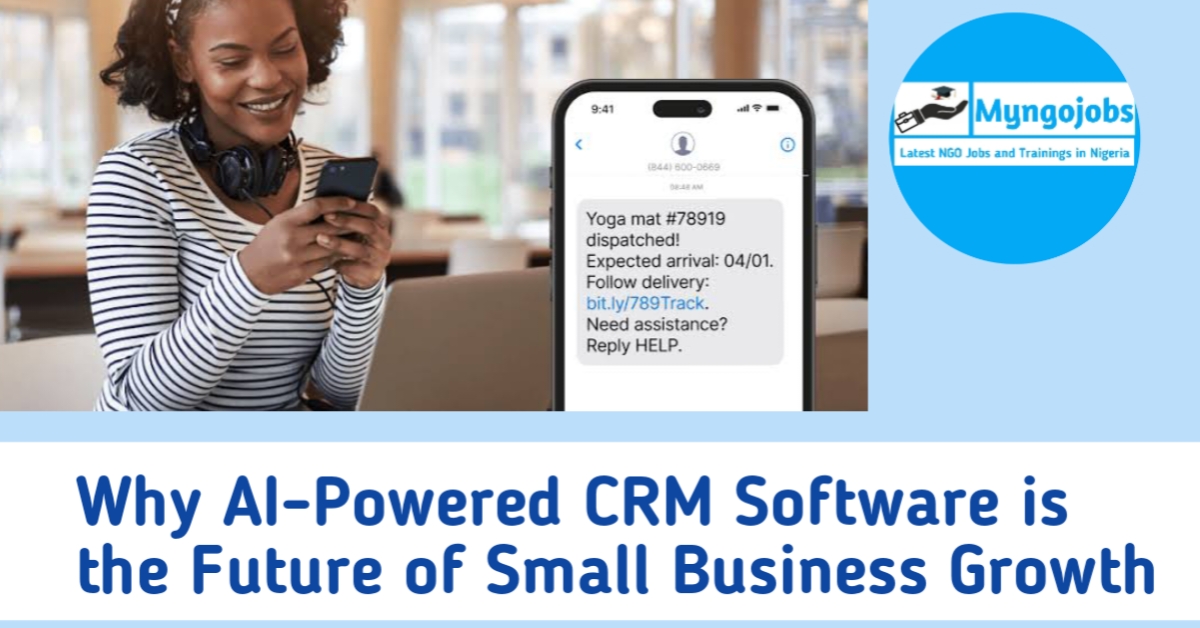
Why AI-Powered CRM Software is the Future of Small Business Growth
Every successful business, whether large or small, is built on relationships—relationships with customers, suppliers, and partners. For small businesses, customer loyalty often…
Learning Outcome
By the end of this article, readers will understand how AI-powered CRM software for small businesses enhances customer relationships, drives efficiency, supports decision-making, and contributes to long-term business growth.
Topic Goal
The main goal is to explain why AI-powered CRM software is no longer a luxury but a necessity for small businesses aiming to compete, grow, and thrive in today’s digital marketplace.
Introduction
Every successful business, whether large or small, is built on relationships—relationships with customers, suppliers, and partners. For small businesses, customer loyalty often determines survival. However, managing these relationships can be overwhelming without the right tools.
This is where AI-powered CRM software for small businesses becomes a game-changer. Traditional customer relationship management (CRM) systems already help businesses track customer interactions and sales activities, but artificial intelligence (AI) takes it further. AI does not just record information—it learns from it, predicts future behavior, and automates tasks that save valuable time.
In this article, we will explore why AI-powered CRM software is the future of small business growth, how it works, and the advantages it offers to entrepreneurs striving to stay competitive in today’s fast-changing business environment.
Read also: 10 Best Life Insurance Policies for Families in 2025 (Affordable & Reliable)
Topic Content
The Role of CRM in Small Business Success
For decades, CRM systems have allowed businesses to centralize customer data. A good CRM helps keep track of sales leads, organize contacts, and manage communication history. But in small businesses, where resources are limited, standard CRMs sometimes fall short because they require manual input, constant updates, and data interpretation by human staff.
AI changes this dynamic by adding intelligence to the system. Instead of only storing data, AI-powered CRM software for small businesses interprets it, identifies patterns, and even suggests actions that drive sales and improve customer experience.
Why AI-Powered CRM Software is Different
AI introduces three major improvements to CRM technology:
-
Prediction and Forecasting: AI can analyze historical sales data and customer behavior to predict what customers are likely to purchase next. This helps small businesses plan better and reduce uncertainty.
-
Automation of Repetitive Tasks: Instead of spending hours sending follow-up emails or updating records, AI automates these actions. This means business owners and teams can focus on meaningful work, like building relationships and closing deals.
-
Personalized Customer Experience: AI-powered CRM software for small businesses makes personalization easier by studying customer preferences, buying habits, and engagement history. Personalized experiences lead to stronger customer loyalty.
How AI-Powered CRM Supports Small Business Growth
The future of small business growth lies in adopting technology that enhances efficiency without overwhelming teams. AI-powered CRMs provide this balance.
-
Smarter Decision-Making
AI translates raw data into meaningful insights. A small business owner does not need a team of analysts; the system can highlight which products are trending, which customers are at risk of leaving, and where to focus sales efforts. -
Enhanced Customer Retention
It is often said that keeping an existing customer is cheaper than finding a new one. With AI, businesses can detect early signals of customer dissatisfaction—such as reduced engagement or longer response times—and take proactive steps to win them back. -
Time and Cost Efficiency
Small businesses usually operate with limited staff. Automating routine tasks reduces workload and minimizes errors. For example, AI can automatically schedule meetings, respond to common inquiries, or update customer profiles. -
Scalability and Competitiveness
As a business grows, managing more customers becomes complex. AI-powered CRM software for small businesses scales seamlessly, allowing small companies to compete with larger corporations by offering the same level of personalized service.
Read also: Low-Interest Personal Loans for Bad Credit: 7 Lenders That Say Yes
Real-World Applications
Imagine a local bakery using AI-powered CRM software. The system notices that a group of customers frequently orders cakes during the holiday season. Instead of waiting for them to return, the CRM can automatically send them personalized offers in advance, increasing sales.
Or consider a small online fashion store. By analyzing browsing patterns, the CRM identifies that customers who purchase shoes are more likely to buy accessories within a month. With this insight, the store can create targeted promotions, leading to increased revenue.
These examples show that AI is not only for big enterprises. Small businesses stand to gain the most because they need cost-effective strategies to maximize every customer interaction.
Overcoming the Fear of Technology
Many small business owners hesitate to adopt AI-powered solutions because they fear complexity or high costs. However, modern AI-powered CRMs are designed with user-friendly interfaces and affordable subscription plans. Training is often minimal, and cloud-based systems mean updates happen automatically.
The key is to start small—implement AI-powered CRM features that address immediate pain points, such as customer follow-ups or sales forecasting. As the business grows, advanced features can be added gradually.
Read also: Immigration Lawyer Services for Students: What You Need to Know in 2025
The Future of Small Business and AI-Powered CRM
The business landscape is evolving. Customers expect fast, personalized service, and competition is stronger than ever. The businesses that thrive will be those that embrace intelligent tools early.
Looking ahead, AI-powered CRM software for small businesses will become more integrated with other technologies, such as chatbots, voice assistants, and predictive analytics. This means small businesses will have even more opportunities to create seamless, customer-focused experiences.
Conclusion
The future of small business growth will be shaped by technology that allows businesses to do more with less. AI-powered CRM software for small businesses is not just about storing customer data—it is about transforming that data into actionable insights, automating time-consuming tasks, and building stronger customer relationships.
For small businesses, adopting AI-powered CRM is no longer optional; it is the path to survival, growth, and long-term success.
Self-Assessment
-
Do I understand how AI-powered CRM software differs from traditional CRM?
-
Can I explain how AI helps small businesses personalize customer experiences?
-
Do I see how automation and prediction can improve efficiency and growth?
-
Am I able to identify ways my own or a hypothetical small business could benefit from AI-powered CRM software?
References
-
Harvard Business Review. (2023). How AI is changing the customer experience landscape.
-
Forbes. (2024). The role of AI in small business transformation.
-
Gartner. (2024). Future trends in CRM and AI adoption.
-
McKinsey & Company. (2023). The impact of AI on small business growth.