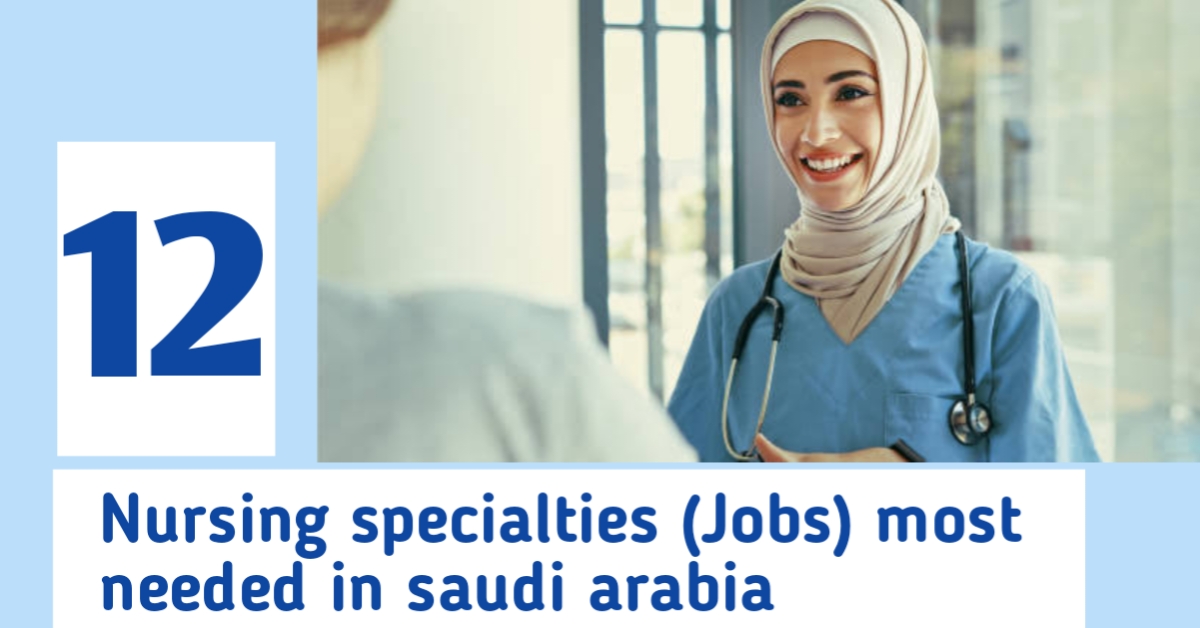
12 Nursing specialties (Jobs) most needed in saudi arabia
To find nursing jobs in Saudi Arabia, you need to meet specific requirements, including a formal nursing diploma or degree which is very essential, 2-3 years of clinical experience, and passing the Saudi Prometric exam to get licensed by the Saudi Commission for Health Specialties (SCFHS). Job opportunities can be found on recruitment agency websites like CCM Recruitment, Naukrigulf, and Dynamic Health Staff, as well as professional networking sites like LinkedIn. Benefits of working in Saudi Arabia include competitive, often tax-free, salaries, housing, medical insurance, and paid leave.
Learning Outcome
By the end of this article, readers will understand the key nursing specialties in demand in Saudi Arabia, including their responsibilities, skills, and educational requirements.
Topic Goal
To provide an overview of the top 12 nursing specialties needed in Saudi Arabia, highlighting the essential skills, qualifications, and responsibilities for each role.
Introduction
As Saudi Arabia’s healthcare system continues to expand, there is a growing demand for specialized nursing roles to meet the needs of a diverse and increasing population. Whether you’re an experienced nurse or a new graduate, this guide will help you navigate the various specialties in high demand, along with the qualifications and skills necessary to succeed in these roles.
Read also: How To Pass Saudi Prometric Exam For Nurses Best Practices
1. Pediatric Nursing
Pediatric nurses care for children, from newborns to adolescents, providing treatment, emotional support, and education for both the child and their family.
Responsibilities:
- Utilizes the nursing process to assess, plan, implement, and evaluate patient care in accordance with established policies and procedures; provide guidance, direction, and coordination for assigned personnel in activities directed towards standards of patient care, safety, and infection control.
- Performs a variety of supportive and technical nursing skills and utilizes a range of equipment, supplies, medications, treatments, monitoring techniques, and other diagnostics, therapeutic, and supportive measures in carrying out medical orders.
- Determines a child’s needs related to pain management.
- Differentiates between normal and abnormal physical findings.
- Serves as a child advocate.
- Evaluates a child for signs and symptoms of abuse.
- Administers medication using age-appropriate guidelines.
- Performs physical examinations, such as monitoring vitals, taking blood and urine samples, etc.
- Ensures patient confidentiality is maintained and rights are upheld.
- Exercises professional behavior and is responsible for her actions as a Registered Nurse.
- Performs other applicable tasks and duties within the realm of her knowledge, skills, and abilities.
Educational Requirements:
Nursing degree with pediatric training.
Skills:
- Strong communication with children and families.
- Knowledge of pediatric care protocols.
- Pain management expertise.
2. Staff Nurse – Accident and Emergency (A&E)
A&E nurses provide critical, immediate care to patients in emergency situations, often working in high-stress environments.
Responsibilities:
- Provide immediate and effective nursing care to patients in the Accident and Emergency department.
- Assess patient conditions, monitor vital signs, and report changes to medical staff promptly.
- Administer medications and treatments as prescribed, ensuring patient safety at all times.
- Collaborate with doctors, paramedics, and other healthcare professionals to deliver coordinated care.
- Maintain accurate and detailed patient records in compliance with hospital policies and healthcare regulations.
- Operate emergency medical equipment and assist with procedures as required.
- Educate patients and their families on care plans, treatment procedures, and follow-up requirements.
- Participate in training and continuous professional development to stay updated with emergency care best practices.
Educational Requirements:
- Bachelor’s Degree in Nursing.
- Valid registration/license as a Nurse.
- Minimum two years’ clinical experience.
Skills:
- Strong clinical knowledge of emergency nursing practices.
- Ability to perform under pressure.
- Compassionate, patient-focused approach.
Read also: How to become ICU Nurse, Best Steps Described
3. Nurse – Intensive Care Unit (ICU)
ICU nurses care for patients with life-threatening conditions, monitoring their vital signs and administering life-sustaining treatments.
Responsibilities:
- Contribute to nursing policies and procedures that conform to current standards of nursing practice and operational policies while maintaining compliance with accreditation standards.
- Collaborate with physicians, pharmacists, and other medical team members to improve the quality of services and resolve identified problems.
- Participate in management team meetings to discuss updates or resident complaints & concerns.
- Monitor the infection control program designed to provide a safe and comfortable environment to prevent the transmission of disease and infection.
- Promote compliance with accident prevention procedures, rules, and safe work practices.
- Monitor incidents and complaints daily to identify those defined as unusual occurrences by hospital policy and promptly report to authorities for appropriate action.
Educational Requirements:
- Bachelor of Science in Nursing.
- Master’s Degree preferred.
- Minimum 1-year experience for non-Saudis.
Skills:
- Knowledge of healthcare regulations.
- Strong organizational and time management skills.
- Critical thinking and problem-solving abilities.
4. Nurse – Operating Room (OR)
Operating room nurses prepare the surgical environment, assist during surgeries, and provide post-operative care to ensure patient recovery.
Responsibilities:
- Conduct comprehensive pre-operative assessments, including reviewing medical histories and assessing physical conditions to ensure patient readiness for surgery.
- Prepare the operating room for surgery, ensuring all necessary equipment, instruments, and supplies are sterile and ready for use.
- Collaborate with the surgical team by assisting during procedures, maintaining a sterile environment, and handling instruments and supplies as needed.
- Continuously monitor patients’ vital signs and anesthesia levels during surgery, promptly reporting any abnormalities to the surgical team.
- Provide immediate post-operative care, monitoring patients as they awaken from anesthesia and ensuring their comfort and safety before transfer to recovery.
- Maintain accurate and detailed documentation of surgical procedures, patient assessments, and any incidents that occur in the operating room.
Educational Requirements:
- Bachelor’s degree in Nursing or equivalent.
- Minimum 3 years’ nursing experience in the operating room.
Skills:
- Proficiency in sterile techniques.
- Strong communication and teamwork skills.
- ACLS certification.
5. Staff Nurse – Neonatal Intensive Care Unit (NICU)
NICU nurses care for newborns who are premature or critically ill, providing specialized care to ensure their survival and growth.
Responsibilities:
- Provide specialized care for premature and critically ill neonates.
- Administer medications and monitor vital signs.
- Provide emotional support to families and educate them on newborn care.
- Ensure all NICU equipment is functioning properly and that safety protocols are followed.
Educational Requirements:
- Bachelor’s degree in Nursing.
- NICU certification required.
Skills:
- Expertise in neonatal care.
- Ability to provide emotional support to families.
- Proficiency in neonatal monitoring equipment.
6. Staff Nurse – Pediatric Intensive Care Unit (PICU)
PICU nurses care for critically ill children, providing advanced medical support and working closely with pediatric specialists.
Responsibilities:
- Deliver comprehensive nursing care to critically ill infants, children, and adolescents in the PICU.
- Monitor vital signs, administer medications, manage IV lines, and support advanced life-support equipment such as ventilators and infusion pumps.
- Respond promptly to emergencies and participate in pediatric resuscitation protocols.
- Collaborate with pediatric intensivists, respiratory therapists, and other healthcare professionals to ensure coordinated, high-quality care.
- Accurately document patient care, observations, and treatment plans in electronic medical records (EMR).
Educational Requirements:
- Bachelor of Science in Nursing (BSN) or equivalent from a recognized institution.
- PALS (Pediatric Advanced Life Support) certification.
Skills:
- Strong clinical skills in pediatric critical care.
- Compassionate communication with families.
- Ability to manage advanced life-support equipment.
7. Staff Nurse – Cardiac ICU
Cardiac ICU nurses specialize in caring for patients with severe heart conditions, ensuring their recovery after cardiac events or surgeries.
Responsibilities:
- Provide direct nursing care to patients with complex cardiac conditions, including post-operative cardiac surgery and heart failure cases.
- Monitor cardiac rhythms, vital signs, and manage advanced life support equipment such as ventilators, intra-aortic balloon pumps, and cardiac monitors.
- Act swiftly in emergencies such as cardiac arrest and participate in Code Blue and ACLS protocols.
- Collaborate closely with cardiologists, cardiac surgeons, and other ICU team members to develop and implement individualized care plans.
Educational Requirements:
- Bachelor of Science in Nursing.
- ACLS (Advanced Cardiovascular Life Support) certification.
Skills:
- Expertise in cardiac monitoring and emergency care.
- Strong problem-solving and decision-making skills.
- Emotional resilience in high-pressure situations.
Read also: How to Become a Midwife in 5 simple Steps
8. Nurse Midwife
Nurse midwives specialize in pregnancy, childbirth, and postpartum care, providing both medical and emotional support to mothers.
Responsibilities:
- Provide prenatal, labor, delivery, and postpartum care to women.
- Monitor the health of mother and baby, identifying and managing potential complications.
- Offer education and counseling on pregnancy, childbirth, breastfeeding, and newborn care.
- Collaborate with obstetricians, pediatricians, and other healthcare professionals to ensure comprehensive patient care.
Educational Requirements:
- Bachelor’s degree in Nursing with Midwifery certification.
Skills:
- Knowledge of prenatal, perinatal, and postpartum care.
- Ability to handle obstetric emergencies.
- Strong communication skills for educating patients.
9. Registered Nurse
Registered nurses provide comprehensive care in hospitals, clinics, and other healthcare settings, focusing on patient assessment, treatment, and education.
Responsibilities:
- Provide direct patient care and support patients’ health and well-being according to established protocols.
- Monitor patient conditions, take vital signs, and observe symptoms.
- Administer medications and treatments as prescribed by physicians.
- Collaborate with multidisciplinary teams to develop and implement individualized patient care plans.
Educational Requirements:
- Valid Registered Nurse license.
- Bachelor’s degree in Nursing.
Skills:
- Strong clinical knowledge and patient care skills.
- Ability to work in a multicultural environment.
- Proficient in medical record keeping.
10. Female Nurse
Female nurses care for female patients across various departments, including OB/GYN, providing culturally sensitive care in line with Saudi Arabia’s healthcare standards.
Responsibilities:
- Provide comprehensive nursing care to female patients in accordance with hospital policies and protocols.
- Monitor patient health and administer treatments as prescribed.
- Educate patients and their families on health maintenance and disease prevention.
- Respond promptly to emergency situations and provide life-saving interventions when necessary.
Educational Requirements:
- Registered Nurse with a valid nursing license in Saudi Arabia.
Skills:
- Strong communication skills.
- Ability to work effectively in a multicultural and diverse environment.
11. Midwife – Labor and Delivery
Midwives specializing in labor and delivery assist women during childbirth, providing hands-on support and managing emergencies as needed.
Responsibilities:
- Provide comprehensive prenatal, labor, delivery, and postnatal care to expectant mothers, ensuring a safe and positive birthing experience.
- Monitor maternal and fetal health, conducting routine assessments, ultrasounds, and screenings as needed.
- Assist and support mothers during labor, offering pain management techniques, emotional reassurance, and medical interventions when necessary.
Educational Requirements:
- Bachelor’s Degree in Midwifery or Nursing with Midwifery specialization.
Skills:
- Expertise in labor and delivery.
- Ability to handle obstetric emergencies.
- Strong interpersonal and communication skills.
12. Staff Nurse – OB & GYN (Midwifery Unit)
OB & GYN nurses assist with maternity care, monitoring both maternal and fetal health and supporting women during childbirth and recovery.
Responsibilities:
- Assist with nursing care during labor, delivery, and postpartum recovery under the guidance of midwives and obstetricians.
- Monitor maternal and fetal vital signs, administer prescribed medications, and support normal and assisted births.
- Provide antenatal and postnatal nursing care, including patient education, hygiene care, and breastfeeding support.
- Assist in preparing labor rooms, delivery suites, and operating theaters for obstetric procedures.
- Document patient observations, interventions, and outcomes in electronic medical records (EMR).
- Provide compassionate support to patients and families, especially during labor and recovery.
- Ensure adherence to infection control, patient safety, and nursing standards in all areas of maternal care.
- Collaborate with midwives, OB/GYN physicians, pediatricians, and the wider care team to ensure coordinated and culturally sensitive care.
- Participate in department-based training, safety drills, and quality improvement programs.
Educational Requirements:
- Bachelor of Science in Nursing (BSN) or equivalent.
- Midwifery certification or experience in OB/GYN, maternity, or midwifery departments.
Skills:
- Proficiency in maternal care and newborn assessments.
- Compassionate, emotionally resilient, and able to provide support during emotionally sensitive situations.
- Ability to work effectively with multidisciplinary teams.
Conclusion
Saudi Arabia’s growing healthcare sector offers tremendous opportunities for nurses in specialized roles. Whether you are an experienced professional or just starting your nursing career, pursuing a specialty in one of the fields mentioned can provide you with rewarding challenges, job security, and the chance to contribute meaningfully to patient care.
As the demand for skilled nurses increases, those with the right qualifications, expertise, and dedication to patient care will play a vital role in the Kingdom’s healthcare development. By obtaining the required certifications and expanding your knowledge in these specialized fields, you can find success and growth in Saudi Arabia’s dynamic healthcare environment.
Self-Assessment
- Which specialty aligns best with your career goals and interests?
- Do you meet the educational and licensing requirements to practice in Saudi Arabia?
- What additional certifications or skills can you acquire to increase your chances of securing a position in your desired specialty?
References
- Saudi Commission for Health Specialties (SCFHS)
- Saudi Ministry of Health Careers Section
- Nursing Jobs in Saudi Arabia – Job Portals